If you’ve noticed bulging, blue-purple cords on your legs, you’re probably already asking the two most common questions people search: what are varicose veins, and what causes varicose veins. In short: varicose veins are enlarged, twisted veins that form when the valves inside them stop working properly. Below, we cover what varicose veins are, what causes varicose veins, the full range of varicose veins symptoms, and the varicose veins treatment options available in Istanbul.
What are varicose veins?
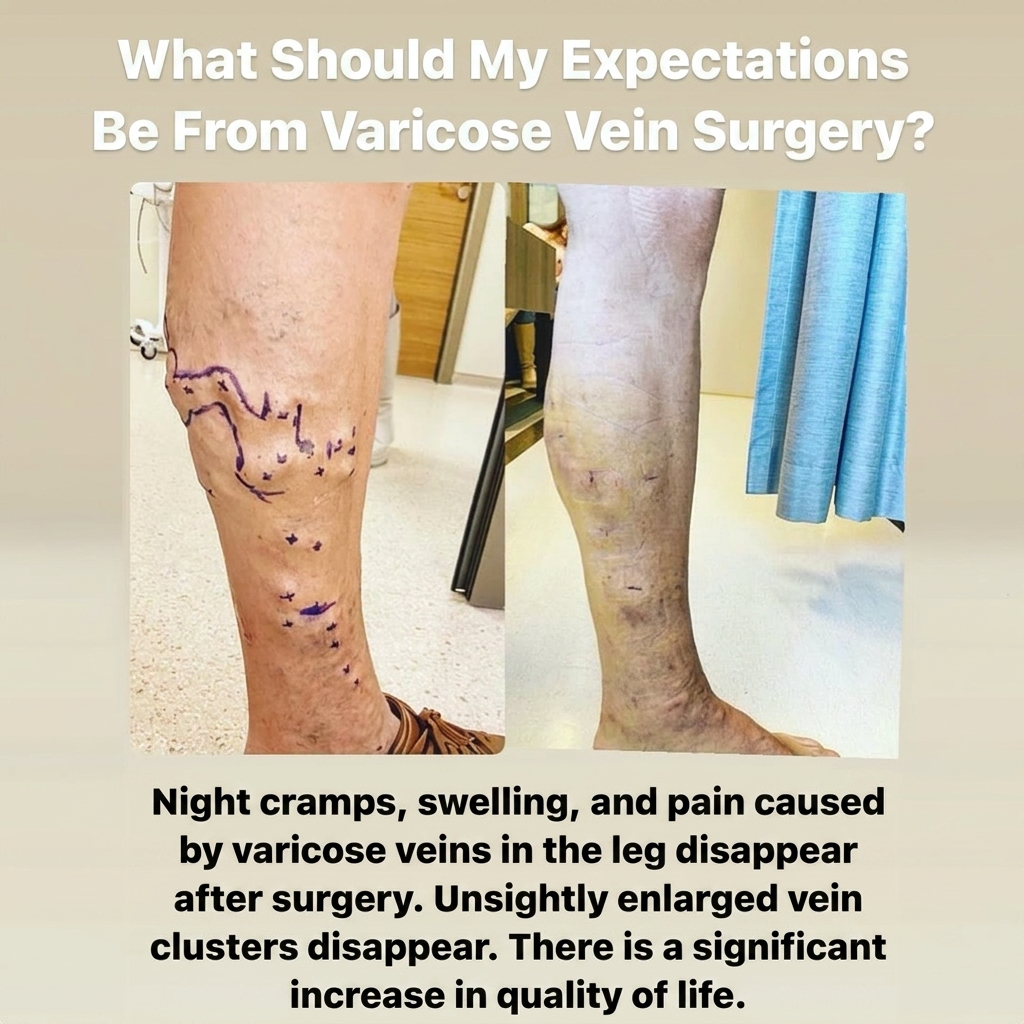
Varicose veins are swollen, rope-like veins that bulge just beneath the skin, most often on the calves and inner legs. They form when the tiny one-way valves inside a vein fail, letting blood pool instead of flowing back toward the heart. That pooling raises pressure inside the vein, stretching its walls until it becomes visibly twisted and enlarged. Unlike a purely cosmetic mark, what are varicose veins really represent is a functional circulation problem, which is why the condition is assessed with ultrasound rather than by appearance alone.
They’re easy to recognise: bluish-purple, rope-like cords that may appear raised or knotted under the skin. But unlike purely cosmetic concerns, varicose veins represent genuine circulatory dysfunction that, if left untreated, can progress to chronic pain, skin damage, and in some cases, dangerous blood clots.
Important distinction: Varicose veins are not the same as spider veins. Spider veins (or thread veins) are tiny, web-like capillaries visible through the skin, usually harmless and purely aesthetic. Varicose veins are deeper, larger, and carry a greater risk of medical complications.
Types of Varicose Veins
Not all varicose veins look the same or carry the same risk. There are four main types:
- Spider veins: fine, red-blue capillaries on the skin surface; cosmetic only, rarely symptomatic.
- Reticular veins: slightly larger, blue-green veins close to the surface; may cause mild aching or itching.
- Saphenous (great/small) vein varicosities: the most common clinical type; dilated main leg veins causing heaviness, pain, and swelling.
- Deep vein varicosities: invisible on the skin surface but detectable by ultrasound; highest risk for DVT and serious complications.
Spider Veins vs. Varicose Veins
Since spider veins appear in that list above, it’s worth clarifying spider veins vs varicose veins right away, because patients often use the terms interchangeably. In the spider veins vs varicose veins comparison, spider veins are the smaller, thread-like red or blue capillaries visible just under the skin’s surface, usually painless and purely cosmetic. Varicose veins are larger, deeper, raised, and carry the circulatory risks described throughout this page. When people compare spider veins vs varicose veins in terms of treatment, spider veins typically respond to simple cosmetic sclerotherapy, while true varicose veins usually need ultrasound-guided endovenous treatment. Your specialist can settle the spider veins vs varicose veins question definitively during your first consultation.
What Causes Varicose Veins?
Patients frequently ask what causes varicose veins, expecting a single answer, but it’s usually a combination of factors. The direct cause is always valve failure, but what causes varicose veins to develop in one person and not another comes down to overlapping risk factors that are well established by research:
- Genetics: the single strongest predictor. If both parents have varicose veins, your lifetime risk is approximately 90%.
- Female sex: female hormones (oestrogen, progesterone) relax vein walls. Pregnancy and menopause intensify this effect.
- Pregnancy: increased blood volume plus uterine pressure on pelvic veins dramatically raises risk, often improving after birth.
- Ageing: vein walls and valves weaken naturally with age. Prevalence rises sharply after 50.
- Obesity: excess body weight increases intra-abdominal pressure, compressing pelvic veins and impeding blood return.
- Prolonged standing: teachers, healthcare workers, hairdressers, and retail workers face elevated risk due to sustained upright posture.
- Sedentary lifestyle: the leg-muscle “pump” is essential for venous return. Inactivity weakens this mechanism.
- Prior DVT: previous deep vein thrombosis damages valves permanently, significantly raising varicose vein risk.
Understanding what causes varicose veins in your specific case is part of what a proper ultrasound assessment establishes before any treatment plan is made. To summarise the varicose veins causes discussed above, the varicose veins causes are: weakened vein valves, genetics, female hormones and pregnancy, natural ageing, excess body weight, and long periods of standing or sitting. Most patients have more than one of these varicose veins causes acting together, which is why treatment is always personalised rather than one-size-fits-all. Identifying the specific varicose veins causes in your case is the first step your specialist takes at consultation.
Varicose Veins Symptoms
Varicose veins symptoms don’t always start with something you can see. For many patients, the first varicose veins symptoms are a heavy, aching feeling in the legs by the end of the day, or night-time cramping, long before any vein becomes visible. As the condition progresses, visible varicose veins symptoms appear:
- Aching or heavy sensation in the legs
- Burning or throbbing along vein lines
- Muscle cramps, especially at night
- Swelling in ankles and lower legs
- Itching around one or more veins
- Skin discolouration (brownish staining)
- Pain that worsens after prolonged standing
- Restless legs syndrome
- Visible twisted, bulging veins
- Skin hardening above the ankle
Because varicose veins symptoms can range from mild discomfort to significant pain, a clinical exam and ultrasound help determine how far the condition has progressed.
Seek urgent care if: a varicose vein begins to bleed, even if the bleeding appears to stop on its own. Varicose vein haemorrhage can be significant. Similarly, sudden-onset calf pain, redness, and warmth may indicate deep vein thrombosis (DVT), a medical emergency. Contact your doctor or emergency services immediately.
Are Varicose Veins Dangerous?
A question we hear constantly: are varicose veins dangerous? For most patients, the honest answer is no. Are varicose veins dangerous in the sense of an emergency is rare, and many people live with them as a manageable, mostly cosmetic issue for years. But “usually not dangerous” isn’t the same as “never.” Whether varicose veins are dangerous in your case depends on whether they’re causing skin changes, recurrent clotting (superficial thrombophlebitis), or signs of chronic venous insufficiency. Left untreated for years, varicose veins can occasionally lead to skin ulcers or, less commonly, deep vein thrombosis, which is why the question of whether varicose veins are dangerous is best answered by an ultrasound, not a mirror. If you remain unsure are varicose veins dangerous in your own case, a short consultation and scan will give you a clear answer either way.
Possible Complications If Left Untreated
Most people with varicose veins never develop a serious complication, and many live with them as a manageable, largely cosmetic condition for years. But because varicose veins reflect a real breakdown in venous circulation, a minority of cases do progress:
- Superficial thrombophlebitis: a blood clot forms inside the varicose vein itself, causing a hard, red, tender cord under the skin. Painful, but rarely dangerous on its own.
- Venous (skin) ulcers: chronic pooling of blood raises pressure in the surrounding tissue, eventually breaking down the skin, usually near the ankle. These heal slowly and are prone to infection.
- Chronic venous insufficiency (CVI): the broader, progressive condition that untreated varicose veins are often an early sign of, marked by persistent swelling, skin thickening and discolouration.
- Deep vein thrombosis (DVT): a clot forming in the deeper venous system, carrying a risk of the clot travelling to the lungs (pulmonary embolism), a medical emergency.
- Bleeding: a varicose vein sitting close to the skin’s surface can bleed heavily from a minor knock, more than the wound would suggest.
When to Worry About Varicose Veins
So when to worry about varicose veins seriously enough to seek urgent care? Knowing when to worry about varicose veins comes down to a short list of red-flag signs: the vein bleeding, sudden calf pain, redness, warmth or swelling in one leg, a hard, red, tender cord along the vein, or an open sore near the ankle that isn’t healing. Outside of these specific signs, when to worry about varicose veins is less urgent and more a matter of scheduling a routine consultation once symptoms start interfering with daily life.
How Varicose Veins Are Diagnosed
Accurate diagnosis goes beyond looking at the skin. A thorough assessment ensures your treatment plan targets the actual source of reflux, not just the veins that are visible on the surface.
Clinical examination: your specialist will examine your legs while you’re standing (to maximise venous distension), assess skin changes, check capillary refill, and take a detailed history including family history, duration of symptoms, and any prior treatments.
Duplex Doppler ultrasound: the gold-standard investigation. This painless, real-time scan maps your entire venous system, both superficial and deep. It detects valve reflux (blood flowing backwards), measures vein diameter, identifies thrombosis, and guides the choice of treatment. Without it, treatment is essentially guesswork.
Venography (if required): contrast-enhanced imaging used in complex or recurrent cases where deep vein anatomy must be precisely mapped before surgery. Rarely needed as a first-line test.
Treatment planning: based on clinical findings and ultrasound mapping, your specialist designs a personalised treatment plan specifying which veins to treat, in which order, and which modality is best suited to each segment.
Self-Care and Prevention
Not every varicose vein needs an immediate procedure. For milder cases, or while you’re waiting for or recovering from treatment, several evidence-based measures reduce symptoms and slow progression:
- Compression stockings: graduated compression improves venous return and is the most consistently recommended conservative measure. Your specialist will advise the correct pressure class; over-the-counter stockings are not a substitute for a fitted prescription in more advanced cases.
- Leg elevation: raising your legs above heart level for 15-20 minutes, several times a day, uses gravity to assist venous drainage.
- Regular movement: walking activates the calf-muscle pump, the body’s own mechanism for pushing blood back to the heart. Avoid long unbroken periods of sitting or standing.
- Weight management: excess weight increases pressure on pelvic and leg veins; even modest weight loss reduces venous pressure.
- Avoiding prolonged immobility: particularly relevant on long-haul flights or car journeys; take breaks to walk, or wear compression stockings for the journey.
These measures manage symptoms; they do not close a faulty vein. If a duplex ultrasound has already confirmed valve reflux, conservative care alone will not resolve the underlying problem, and the vein is likely to progress rather than improve on its own.
How to Get Rid of Varicose Veins
Once diagnosis confirms valve reflux, the question shifts from “what’s wrong” to how to get rid of varicose veins for good. There is no single universal answer to how to get rid of varicose veins, the right approach depends entirely on your ultrasound findings. Compression stockings and lifestyle changes can ease symptoms, but they don’t close a faulty vein, so if you’re asking how to get rid of varicose veins permanently, the answer is one of the minimally invasive procedures below: endovenous laser ablation, radiofrequency ablation, foam sclerotherapy, or medical adhesive (glue) treatment. Each is a same-day, outpatient way to get rid of varicose veins, chosen according to your ultrasound mapping rather than a single default option.
Varicose Vein Treatment
Modern vascular medicine offers several highly effective, minimally invasive options for varicose veins treatment. The right choice depends on the size and location of the affected veins, your overall health, and the ultrasound findings. Most procedures are performed as outpatient treatments, you go home the same day. In short, effective varicose veins treatment today rarely means open surgery; most patients complete their varicose veins treatment in a single outpatient visit.
Varicose Vein Treatment in Turkey and Istanbul
Turkey has become one of the leading destinations in Europe and the Middle East for vascular surgery and varicose vein treatment. A combination of internationally trained specialists, modern hospital infrastructure, and significantly lower procedure costs compared to Western Europe or the United States has made Turkey, and Istanbul in particular, an increasingly popular choice for both domestic and international patients.
Why Choose Turkey for Varicose Vein Treatment?
Internationally accredited hospitals: many hospitals and private clinics in Istanbul and other major Turkish cities hold JCI (Joint Commission International) accreditation, the global benchmark for healthcare quality. Facilities are equipped with advanced vascular imaging systems, including colour Doppler ultrasound, and offer the full spectrum of minimally invasive treatments such as endovenous radiofrequency ablation, laser ablation, foam sclerotherapy, and medical adhesive (glue) procedures.
Experienced vascular surgeons: Turkish cardiovascular and vascular surgeons frequently receive postgraduate training in Europe or the United States and maintain active memberships in international phlebology and vascular surgery associations. Many specialists operate in both public university hospitals and private practice, ensuring high clinical standards across settings.
Cost-effective care: the cost of varicose vein treatment in Turkey is typically 50-70% lower than comparable procedures in the United Kingdom, Germany, or the United States, without compromise in clinical outcome. This cost advantage is particularly significant for procedures such as endovenous laser ablation or radiofrequency ablation, which carry high price tags in many Western healthcare systems.
Accessible location: Istanbul’s two international airports, Istanbul Airport (IST) and Sabiha Gökçen (SAW), offer direct connections to hundreds of destinations across Europe, the Middle East, Central Asia, and Africa. Most varicose vein procedures require only a short hospital stay or are performed on an outpatient basis, making Istanbul well-suited for medical travel.
Can Varicose Veins Come Back After Treatment?
Modern endovenous treatments (laser, RFA, glue, foam sclerotherapy) have high long-term closure rates for the treated vein segment. However, “cured of this vein” is not the same as “immune to varicose veins for life”: the underlying tendency toward valve failure remains, and new varicose veins can develop in previously untreated veins over time.
Recurrence is more likely if you:
- Have a strong family history or genetic predisposition
- Carry excess body weight
- Spend long periods standing or sitting without movement
- Become pregnant again after treatment
A follow-up ultrasound one to two weeks after treatment confirms successful vein closure, and periodic review lets your specialist catch any new reflux early, usually treatable with a quick, minimally invasive top-up rather than a repeat of the original procedure
Spider Veins vs. Varicose Veins
It’s worth clarifying spider veins vs varicose veins, since patients often use the terms interchangeably. In the spider veins vs varicose veins comparison, spider veins are the smaller, thread-like red or blue capillaries visible just under the skin’s surface, usually painless and purely cosmetic. Varicose veins are larger, deeper, raised, and carry the circulatory risks described above. When people compare spider veins vs varicose veins in terms of treatment, spider veins typically respond to simple cosmetic sclerotherapy, while true varicose veins usually need ultrasound-guided endovenous treatment. Your specialist can settle the spider veins vs varicose veins question definitively during your first consultation.
Choosing the Right Specialist
When selecting a vascular surgeon or phlebologist in Turkey, patients should look for the following:
- Board certification in cardiovascular surgery, vascular surgery, or a recognised phlebology qualification.
- Routine use of duplex Doppler ultrasound for pre-treatment mapping and post-treatment follow-up.
- Availability of multiple treatment modalities, not a “one-size-fits-all” approach.
- Transparent communication about expected outcomes, potential complications, and aftercare requirements.
- Accredited hospital or clinic affiliation.
As with any medical procedure, thorough research and a detailed pre-treatment consultation are essential steps before committing to treatment.