





Deep vein thrombosis (DVT) is a serious condition characterized by the formation of blood clots in the deep veins of the legs. DVT disrupts the normal functioning of the veins, impairing proper blood flow and causing blood to pool in the veins. If left untreated, this condition can become extremely dangerous.
This is because clots can break off and travel to vital organs such as the lungs, causing complications that can be life-threatening, such as pulmonary embolism.
DVT is caused by weakened vein walls, slow blood flow within the veins, or a blood composition that is prone to clotting. People who remain immobile for long periods, are on bed rest, or remain immobile for long periods due to reasons such as air travel are at higher risk of deep vein thrombosis.
DVT can occur in veins in the legs as well as, rarely, in other areas such as the arms and pelvis. Early diagnosis and treatment of DVT is crucial to prevent these complications.
What is Deep Vein Thrombosis?
Deep vein thrombosis (DVT) is a condition caused by blood clots forming in deep veins. DVT, which is commonly seen in the legs, can sometimes affect the arms as well. Clots accumulate on the walls of the veins, blocking blood flow.
This blocked blood flow can manifest itself through symptoms such as swelling, pain, and changes in skin color. If left untreated, DVT carries the risk of clots breaking off and traveling to the lungs, causing a pulmonary embolism.
The danger of DVT is that the clot can break off and enter the bloodstream. These clots can block the free flow of blood throughout the body and result in potentially fatal complications.
One of the most important causes of DVT is slow blood flow in the veins, which increases the risk of clotting. For example, people who travel long distances by plane, patients who remain immobile for long periods, and those who are bedridden may develop this disease.
Symptoms of Deep Vein Thrombosis
The symptoms of deep vein thrombosis can vary depending on the severity of the disease and the location of the clot. The most common symptom of deep vein thrombosis is intense pain and swelling in the legs. This swelling is usually more pronounced below the knee or in the calf. The pain may increase when the leg is moved.
- When a clot begins to accumulate in a vein, blood flow is blocked, which can cause red, purple, or blue discoloration of the skin on the leg.
- This change in skin color indicates the presence of a clot.
- An increase in temperature may be felt in the affected area of the leg. This is a sign of inflammation occurring in the vein.
- Deep vein thrombosis causes swelling in the leg. The swelling may be more intense, especially in the lower legs.
- Pain may also be felt when touching the legs.
- Due to swelling and pain, DVT patients often have difficulty walking. This can negatively affect their daily activities.
If these symptoms are noticed, patients should seek medical attention immediately and begin the necessary treatment. Otherwise, this condition can pose life-threatening risks.
Thrombosis caused by vascular occlusion may also be a sign of other health problems. If you want to learn about the general symptoms, our content on What Are the Symptoms of Vascular Occlusion? will be helpful.
DVT can develop after prolonged immobility, trauma, or certain surgeries. In such cases, leg pain may occur. Our article How Is Leg Pain Treated? can enlighten you on this subject.
How Is Deep Vein Thrombosis Diagnosed?
The presence of the aforementioned symptoms in patients with risk factors may indicate deep vein thrombosis.
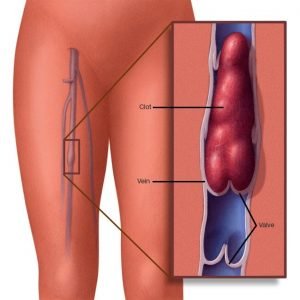
In individuals with active cancer, situations requiring prolonged immobility, such as hospitalization or long journeys, or following recent surgical procedures, the sudden development of swelling in the leg, pain upon pressing on deep veins, and the prominence of superficial veins should not be overlooked as these may indicate deep vein thrombosis (DVT), necessitating a detailed investigation.
Color Doppler ultrasonography is considered the easiest and most reliable method for diagnosing deep vein thrombosis. However, it may not be possible to completely and accurately evaluate the veins inside the abdomen and those located near the heart and in the chest cavity with color Doppler.
In such cases, computed tomography and magnetic resonance venography can be used to obtain more reliable information. These methods can also be used during the same session to diagnose pulmonary embolism.
Venography is one of the most reliable methods for diagnosing deep vein thrombosis. Known as a painful procedure because it involves placing a catheter in a vein, venography is less commonly used today due to advances in other methods.
D-dimer measurement can also be used as a laboratory test. Although a normal D-dimer level generally indicates the absence of deep vein thrombosis, an elevated D-dimer level in the blood should not always be interpreted as a sign of deep vein thrombosis.
Deep Vein Thrombosis Treatment
The treatment of deep vein thrombosis varies depending on the severity of the disease, the location of the clot, and the patient’s overall health. Anticoagulant medications are used in the treatment of DVT to prevent blood clots from growing and to prevent new clots from forming.
These medications stop clots from growing and prevent new clots from forming in the body. The most commonly used anticoagulants include medications such as heparin and warfarin.
Compression Stockings
Compression stockings help regulate blood circulation in the legs and reduce swelling. These stockings help blood return to the legs more quickly, thereby preventing blood clots from remaining in the body. The use of compression stockings is quite common during treatment.
Fibrinolytic Therapy
Fibrinolytic therapy involves drugs specifically developed to dissolve clots formed in blood vessels. This treatment method is preferred especially in the presence of large and life-threatening clots. It can be used in emergency medical conditions such as pulmonary embolism, deep vein thrombosis (DVT), and certain types of stroke.
Fibrinolytic drugs break down fibrin, the main component of blood clots, allowing blood flow to return to normal. This opens blocked vessels and speeds up oxygen delivery to tissues. However, this treatment method may not be suitable for every patient. It should be used with caution, especially in individuals at risk of serious bleeding.
During treatment, patients are usually kept under observation in the hospital. Side effects may include bleeding, low blood pressure, and allergic reactions.
Fibrinolytic treatments performed at our clinic are carefully planned and supervised by Associate Professor Macit Dr. Bitargil. Regular follow-up at our clinic is an important step in increasing the success of treatment.
Surgical Intervention
In some cases, especially when the clot is large or anticoagulant drugs cannot be used, surgical intervention may be necessary. In such cases, clots in the blood vessels can be removed using surgical methods. Additionally, in some patients, a filter may be placed in the blood vessel to prevent the clots from progressing.
DVT treatment may vary from patient to patient. The treatment plan is determined based on factors such as the patient’s age, the size of the clot, and the damage it has caused in the body. The treatment process is successful in most patients and ensures their recovery.
Are Deep Vein Thrombosis and Varicose Veins the Same?
Although varicose veins and deep vein thrombosis (DVT) are both health problems related to the veins in the legs, they are fundamentally different diseases. Varicose veins usually occur as a result of the dilation and twisting of the superficial veins in the legs.
Although varicose veins are mostly considered a cosmetic problem, they can sometimes cause symptoms such as pain, swelling, and fatigue in the legs. Varicose vein treatment is performed using methods such as sclerotherapy and laser treatment.
Deep vein thrombosis, on the other hand, occurs due to clots forming inside the deep veins of the legs and is a much more serious condition. DVT can be life-threatening because of the risk of the clot traveling to the lungs. Therefore, if deep vein thrombosis is not treated, serious complications and the risk of death may occur.
Varicose veins typically develop due to factors such as genetics, obesity, and a sedentary lifestyle, while the causes of DVT include prolonged immobility, obesity, and vascular occlusion. Treatment methods also differ between these two conditions.
In Istanbul, varicose vein treatment generally involves laser therapy, sclerotherapy, and surgical interventions, while DVT treatment involves methods such as anticoagulant drugs, fibrinolytic therapy, and surgical intervention.

Deep Vein Thrombosis Recovery Time
The recovery time for deep vein thrombosis varies depending on the severity of the disease, response to treatment, and the patient’s overall health. Early diagnosis and treatment can speed up the recovery process.
The recovery period for treated DVT cases generally ranges from a few weeks to a few months. However, the recovery process may vary depending on the size and location of the patient’s clots and the treatment methods used.
- Anticoagulant medications play an important role in the treatment of the disease and are usually continued for a period of time during the treatment process.
- One of the most important factors for the recovery of DVT is regular check-ups.
- Check-ups are performed to monitor the response to treatment and to detect any complications.
Throughout the recovery process from DVT, patients are advised to wear compression stockings, move their legs, and do regular exercises. These factors can speed up the recovery process and help the clots dissolve more quickly.
What Should Be Done After Deep Vein Thrombosis Treatment?
To reduce swelling in the legs, it may be beneficial to travel with your knees slightly bent and your legs elevated above heart level. When sitting for long periods, you should move your legs at regular intervals.
Maintaining cardiovascular health is crucial for individuals with deep vein thrombosis. To learn about the risks associated with heart failure, please visit the What is Heart Failure? page.
While awake, you can get up every hour and take short walks. Compression stockings should be worn as recommended, and tight clothing should be avoided.
Deep Vein Thrombosis Exercises
Exercises are an important part of the recovery process in the treatment of deep vein thrombosis. Exercises can help dissolve clots and reduce swelling by increasing blood flow in the legs.
There are some points to consider when exercising. For example, low-impact exercises and movements that work the leg muscles should be preferred.
The exercise program after DVT should be determined individually according to the patient’s condition. Since each patient’s treatment process is different, it is important to start exercising according to the recommendations you receive at our clinic. Performing exercises correctly contributes positively to treatment.
Frequently Asked Questions About Deep Vein Thrombosis
Is Deep Vein Thrombosis Dangerous?
In determining the stage of the disease, symptoms of aortic insufficiency and the patient’s complaints are very important. In first-degree aortic insufficiency, the main complaint is less pronounced, and an increase in the degree of aortic insufficiency indicates that a large amount of blood is flowing backward. As the left ventricle becomes fatigued and enlarged, the contraction force decreases, and a pounding sensation in the heartbeat becomes a common complaint. These complaints may increase when turning to the left or lying down. Fatigue and weakness may be seen as aortic insufficiency progresses. Palpitations, fatigue, shortness of breath, irregular heart rhythm, and a heart murmur can be considered symptoms of aortic insufficiency.
How is a Blood Clot in the Leg Treated?
When there is a blood clot in the leg, treatment is administered to prevent pulmonary embolism and the recurrence of deep vein thrombosis. For this purpose, anticoagulant medication, compression stockings, clot dissolution, and filter placement may be used. The goal of the treatments is to reduce the patient’s leg symptoms and prevent potential problems that may arise in the future. The choice of treatment method should be determined based on the severity of the problem and the patient’s symptoms. This ensures that the most appropriate treatment method is applied and the desired outcome is achieved.
What Should Patients with DVT Pay Attention to?
Patients with deep vein thrombosis (DVT) should make sure to drink plenty of water, as dehydration increases the risk of blood clots. Since prolonged immobility during travel can pose a risk, they should wear compression stockings while traveling. Patients should avoid remaining immobile as much as possible during travel. They should travel with their knees slightly bent and their legs elevated above heart level. In situations requiring prolonged sitting, they should move their legs at regular intervals and take short walks every hour while awake.
Does Deep Vein Thrombosis Fully Heal?
Clotting in the deep veins, known as deep vein thrombosis, is an extremely serious condition. Patients are usually first treated with anticoagulant medication. Although medication usually leads to recovery, in some patients the clot can travel to the pulmonary arteries and cause a life-threatening situation. Generally, deep vein thrombosis can be completely cured with medication and does not cause any sequelae in the patient. Different treatment methods may be used for deep vein thrombosis with different characteristics.
How is Deep Vein Thrombosis Treated?
In cases of early deep vein thrombosis, pharmacomechanical treatment methods are used. In this context, specially developed intravascular clot-dissolving catheters are inserted into the vein and the clot is removed. After this procedure, the catheter is left in the vein for 24 hours. In the treatment of DVT diagnosed within the first 48 hours, the clot formed in the deep veins above the knee and in the abdomen is removed through a small incision using a balloon catheter. When the clot is located below the knee, a clot-dissolving drug is delivered systemically to the vein and the clot is dissolved. If DVT is left untreated, permanent swelling may develop in the leg, and ulcers may form.
Result
Deep vein thrombosis (DVT) is a serious condition characterized by the formation of blood clots in the deep veins of the legs or pelvic area. The clot can cause complete or partial blockage of the vein and may obstruct blood flow.
More importantly, if left untreated, the clot can break off and travel to the lungs, causing a life-threatening condition called pulmonary embolism. Therefore, early diagnosis and treatment are crucial.
Early symptoms of DVT include swelling, pain, increased warmth, and redness in the leg. However, in some cases, patients may not experience any symptoms. Therefore, individuals who lead a sedentary lifestyle, remain bedridden for long periods, or are in the postoperative period should be particularly vigilant.
Treatment typically involves the use of anticoagulant medications and lifestyle changes tailored to the patient. Adopting an active lifestyle, avoiding prolonged sitting, and engaging in regular exercise can help prevent clot formation.
DVT and varicose veins are two different vascular disorders that are often confused. Varicose veins appear as dilation and twisting of superficial veins, while DVT causes blood clots in deep veins.
While varicose veins are generally considered a cosmetic problem, DVT is a serious, life-threatening condition. Given this difference, it is crucial to obtain an accurate diagnosis and determine the appropriate treatment methods.
Thanks to the DVT treatments performed by Associate Professor Dr. Macit Bitargil at our clinic, you can regain your former health. For detailed information, please contact our clinic.