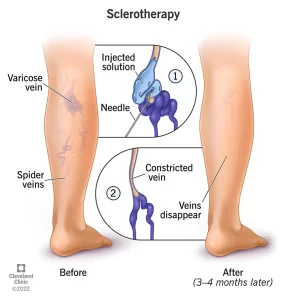
Sclerotherapy is a method used to treat blood clots or varicose veins within the veins. This treatment is commonly used to treat varicose veins in the legs and aims to eliminate the blood vessels.
During this treatment, a special solution is injected to harden the veins, which are then gradually absorbed by the body. Sclerotherapy is performed to improve the appearance of problematic veins in the body and to restore blood flow.
Sclerotherapy Istanbul
Sclerotherapy is defined as a series of interventions performed on varicose veins using a needle. It is one of the most successful treatment methods in recent years. Medication is injected into the vein accessed by the needle. This allows the unnecessary varicose vein to be eliminated more quickly.
There are many different methods available for treating varicose veins. Sclerotherapy is one of the most effective methods with the highest success rate.
Sclerotherapy treatment does not cause significant damage to the patient. Since the needle is inserted into the affected area, slight discomfort is quite normal.
Your doctor will also provide you with the necessary information about this before treatment. Certain precautions are taken to ensure that this procedure is completely painless. One of these precautions is the use of painkillers before treatment.
If any complaints are detected during the post-treatment period, you should definitely consult your doctor. You need to be patient after treatment. The effect is not seen immediately, and patience is required at this stage.
The patient’s return home after sclerotherapy treatment will not take long. The patient will be discharged immediately after treatment. There is no need for the patient to rest or stay in the hospital.
What is Sclerotherapy?
Sclerotherapy is considered a non-surgical treatment method. However, this method should only be performed by a specialist physician and based on accurate assessments.
The procedure is usually performed under local anesthesia, and patients can return to their daily activities immediately. However, being aware of the recovery process and important considerations after treatment is crucial for achieving successful results.
- This treatment method is particularly popular among patients with cosmetic concerns.
- The appearance of varicose veins on the legs can negatively affect a person’s quality of life.
- Therefore, sclerotherapy is a treatment method preferred for aesthetic concerns.
- However, sclerotherapy can be applied not only for aesthetic reasons but also for health problems such as pain and circulation issues caused by varicose veins.
Since each individual’s body structure and health status are different, a comprehensive evaluation before sclerotherapy is of great importance.
The patient’s problems and response to treatment can directly affect how successful the outcome will be. In addition, there may be some lifestyle changes or points to consider after treatment.
Why is Sclerotherapy Performed?
Varicose veins are a type of disease that occurs in the valves of the veins in the leg area. If left untreated, it will not take long for the disease to progress. One of the most important methods in the treatment of this disease is sclerotherapy. With the correct application, it is possible to treat the disease.
Varicose veins cause significant pressure in the affected area. This pressure has a negative impact on the patient’s daily life. Visually, the area appears more twisted and swollen. Varicose veins are the main cause of the “spidery” appearance in the leg area.
Sclerotherapy Istanbul is used to treat the area where varicose veins are present. It is known as a simple procedure involving the injection of a special solution. It is one of the most effective treatment methods.
If left untreated, varicose veins are a serious condition that causes pain due to intense pressure. There are many different factors that trigger the formation of varicose veins. Heavy alcohol consumption and smoking are some of them.
Unhealthy eating habits are also one of the underlying causes of varicose veins. Sclerotherapy, a non-surgical treatment method, is attracting attention for diseases caused by these factors.
As a non-surgical option, sclerotherapy is ideal for patients with cosmetic concerns. You can find more information on this topic in our article titled What is Non-Surgical Varicose Vein Treatment?
Risks of Sclerotherapy – Side Effects
Although sclerotherapy is generally considered a safe treatment, as with any medical procedure, some side effects and risks may occur. However, these effects are usually temporary and can be minimized with proper treatment.
- The substances injected during sclerotherapy may sometimes cause temporary changes in skin color.
- After the procedure, there may be mild pain, sensitivity, or swelling in the legs. However, this condition also resolves over time and does not cause any serious problems.
- During the sclerotherapy procedure, blood clots in the vein dissolve. However, in rare cases, new clots may form as a result of coagulation.
- In rare cases, inflammation of the vein walls may occur. In this case, certain medications and rest may be recommended for treatment.
- Although sclerotherapy is generally a minimally invasive procedure, some patients may experience temporary scarring or marks on their skin.
To minimize the side effects of sclerotherapy treatment, the evaluation and procedure performed at our clinic are of great importance. For this reason, it is beneficial to be aware of all potential side effects and complications before starting treatment.
Sclerotherapy Treatment
Sclerotherapy treatment is quite common among procedures that target blood vessels. This treatment not only eliminates varicose veins but also helps regulate circulatory disorders.
Initial Examination and Assessment
Before starting sclerotherapy treatment, a comprehensive assessment of the patient’s general health and the severity of their varicose veins is required. The initial examination is crucial for the success of the treatment process.
At this stage, the patient’s veins are examined in detail using an ultrasound device at our clinic. Ultrasound helps determine the depth, size, and location of the varicose veins. Based on this evaluation, it is determined whether the varicose veins are suitable for treatment and which treatment methods will be used.
Since each individual’s condition is different, the treatment plan is tailored to the individual. During the initial examination, the most appropriate treatment option is recommended, taking into account the patient’s medical history and current complaints.
Treatment Process
Sclerotherapy is a very simple and quick treatment method. During the procedure, a special solution is injected into the affected veins.
This solution blocks the veins, allowing them to be absorbed by the body over time. Sclerotherapy is usually a procedure that does not require local anesthesia, making the treatment process faster and more comfortable.
The procedure usually takes between 30 minutes and 1 hour. Patients generally feel comfortable during the procedure and do not experience any pain or discomfort. Since sclerotherapy is a non-surgical method, it does not interfere with the patient’s daily life.

The duration of treatment is one of the topics patients are curious about.
You can find information about the process on our How Long Does Sclerotherapy Take? page.
Recovery Process
After sclerotherapy treatment, patients can resume their daily activities immediately. No hospital stay is required after the procedure. However, there are a few recommendations to help the treatment process progress more quickly.
Moving the legs, especially in the treated areas, can help increase blood flow. It is also recommended to wear compression stockings for a few days after treatment.
Compression stockings accelerate the healing of veins and speed up their absorption by the body. These stockings regulate blood flow in the treated area by applying the correct pressure to the veins, thereby contributing to the recovery process.
Monitoring Results
Immediately after sclerotherapy treatment, the treated veins gradually shrink and become less visible. However, complete healing and observation of results may take several weeks.
During this process, changes in the color of the treated veins and healing may be observed. However, it may take several months for the full results to be seen. Regular follow-up appointments after treatment are important for the successful completion of the treatment process.
During these appointments, the condition of the veins is monitored and any adverse situations are prevented. The results after treatment are usually permanent, but it is recommended to pay attention to healthy lifestyle habits to prevent varicose veins from recurring.
The results of sclerotherapy are directly related to the individual’s health status and the correct application of the treatment. There are some points that patients should pay attention to after treatment. In particular, avoiding strenuous exercise, wearing compression stockings, and attending regular check-ups are important for the success of the treatment.
Are There Any Side Effects of Sclerotherapy?
- The side effects of sclerotherapy treatment are not factors that will cause discomfort to the patient or negatively affect their daily life. There will be some redness, but this will disappear on its own within a short period of time.
- A fine-tipped needle is used in the treatment method. This use will cause bruising. The bruising will take a few days to disappear. There will be no swelling or severe pain.
- Color changes called “pigmentation” may be observed. These changes are said to disappear within a month. Pigmentation does not occur in every patient. Studies show that the rate is 10%. This is a very low probability of side effects.
- There will be mild coughing and, consequently, dry mouth. These side effects will pass on the same day.
- Small veins may appear in the treated area. Capillary formation at this stage is not a problem. They are smaller than large veins and, of course, harmless.
- In cases of severe pain or bruising, it will be necessary to consult a doctor. There are not many complaints during the post-treatment process, but it is beneficial to be careful. It is a treatment method with a very low rate of side effects. In addition to its high success rate, this detail also makes the treatment method preferable.
When to resume sports after sclerotherapy is important in terms of the recovery process.
For detailed information on this topic, please see our article titled When Can I Resume Sports After Sclerotherapy?
Sclerotherapy Prices
Sclerotherapy is a widely used method in the treatment of varicose veins. This treatment involves injecting a special solution into the vein to eliminate varicose veins.
Sclerotherapy prices may vary depending on the size of the area to be treated. Since each individual’s condition is different, an examination conducted by Assoc. Prof. Dr. Macit Bitargil at our clinic prior to treatment is very important.
- At our clinic, personalized treatment plans are created by a physician specializing in sclerotherapy treatment.
- Prices are determined based on factors such as the density of the veins to be treated and the patient’s overall health.
- Therefore, to obtain accurate pricing information, we recommend contacting our clinic to schedule a consultation.
For more detailed information and a price quote regarding sclerotherapy treatment, you can contact our Clinic. It would be beneficial to visit our Clinic for an individual assessment to learn about treatment options suitable for your health condition and to find answers to your questions about how the treatment process will proceed.
Reviews from Those Who Have Had Cellulite Treatment with Sclerotherapy
Although sclerotherapy is generally known as a vein treatment, some patients also choose this treatment for cellulite. Sclerotherapy for cellulite aims to improve the appearance of the affected area by regulating blood flow in the cellulite-affected areas using special solutions.
The reviews of people who have undergone sclerotherapy for cellulite are generally positive.
“I decided to try sclerotherapy treatment for my cellulite. Although I was a little hesitant at first, the procedure was quite quick and easy. I noticed a significant improvement in the appearance of my skin within about 1-2 weeks. Now I have smoother skin and feel much more comfortable. There was no pain or swelling in my legs after the treatment; I just wore compression stockings for a few days. I’m very satisfied with the results.”
“I chose sclerotherapy for cellulite treatment and got truly amazing results. I felt no pain during the treatment and didn’t have to interrupt my daily activities afterwards. There was some slight bruising for the first few days, but within a few weeks, the roughness and cellulite appearance on my skin decreased significantly. I definitely recommend it.”
“Having cellulite treatment with sclerotherapy was an excellent experience for me. The procedure was quite quick, and the recovery process was easy. The dimples on my legs started to gradually diminish. I had consulted with several specialists before the treatment, and I got the best results here. Now I feel much more comfortable and confident.”
Cellulite treatment with sclerotherapy can yield successful results with proper evaluation. According to the comments of those who have undergone this treatment, it stands out as a beneficial option both cosmetically and health-wise.
Precautions to Take After Sclerotherapy
As with any treatment or procedure, there are precautions to take after Sclerotherapy Treatment in Istanbul. Sclerotherapy is definitely not an inpatient procedure. The recovery process is quick. The patient will be discharged home on the same day. The precautions to take after treatment are as follows:
- Compression stockings should be worn for 48 hours. On subsequent days, they should be worn from morning until evening. Compression stockings are one of the supportive methods and will also accelerate the healing process. Compression stockings directly affect the success rate of the treatment.
- After sclerotherapy in Istanbul, you will need to walk regularly at a gentle pace. Half-hour walks are one of the factors that increase the success rate of treatment. In addition, you will need to avoid activities such as cycling or exercising.
- Hot water is not recommended after varicose vein treatment in Istanbul. You will need to stay away from baths or similar areas.
- Itching or pain may occur in the treated area after treatment. Ice therapy can be used to eliminate or alleviate this condition. Wrapping ice in a cloth and applying it to the affected area will suffice.
- It is necessary to refrain from epilation or similar laser treatments after sclerotherapy. Shaving the affected area or similar interventions are also not recommended.
- The affected area must be protected for 1 month. It should not be exposed to sunlight or high temperatures.
The details mentioned above are factors that will directly affect the success rate of the treatment. Physicians will also provide all necessary warnings in this regard.
The sensitivity shown by the patient during the recovery process will also increase the effectiveness of the treatment to a certain extent. At the same time, there will be a certain degree of reduction in the patient’s complaints.
When is Sclerotherapy Necessary?
Sclerotherapy, also known as needle therapy, is essentially administered by injecting a medication into a vein to close it off. When the medication is applied in a foamed form, it is referred to as foam therapy, a variant of sclerotherapy.
Sclerotherapy is generally used to treat varicose veins, which are knotted and enlarged veins commonly seen on the legs. Sclerotherapy is particularly effective in treating small and medium-sized varicose veins.
Cosmetic problems caused by varicose veins may lead to the preference for sclerotherapy treatment. The appearance of varicose veins can be improved with sclerotherapy.
Varicose veins can cause pain, swelling, and discomfort in the legs. Sclerotherapy can be applied to eliminate these symptoms and improve the patient’s quality of life.
In some cases, varicose veins can lead to serious complications. Sclerotherapy treatment can be used to prevent the risk of such complications developing.
In cases of superficial venous reflux, blood may flow in the wrong direction due to defective valves in the blood vessels. Sclerotherapy can help resolve this problem.
However, the decision on whether sclerotherapy treatment is appropriate should be made by the doctor after an individual assessment of the patient.
Is the Sclerotherapy Procedure Painful?
Sclerotherapy is an effective method used to treat varicose veins. During sclerotherapy treatment, the patient may experience mild pain or discomfort. However, local anesthesia or cold compresses can be applied to the treatment area before sclerotherapy to minimize any pain or discomfort that may occur during the procedure.
Sclerotherapy treatment is administered by injecting a sclerosing solution into the vein using a special syringe. This solution irritates the inner surface of the vein and causes it to stick together.
Some people may experience a slight burning or stinging sensation during sclerotherapy treatment. This sensation is usually mild and can be reduced by applying anesthesia before the procedure.
After sclerotherapy treatment, mild pain or discomfort may be felt in the application area. In addition, mild bruising, swelling, or redness may be seen in the treated area. These side effects, which are usually mild, resolve on their own within a few days without the need for any intervention.
It is normal to experience mild pain and discomfort during the sclerotherapy procedure. Similarly, it is natural to experience some mild side effects after the procedure. However, it is important to remember that the doctor’s recommendations must be followed completely in order to obtain the maximum benefit from the procedure.
Frequently Asked Questions About Sclerotherapy Treatment
How Many Sessions of Sclerotherapy Are Performed?
Sclerotherapy for varicose vein treatment typically takes between 45 and 60 minutes per session. The number of sessions required for sclerotherapy treatment is determined based on the patient’s specific condition, the structure of the veins in the area to be treated, and the severity of the varicose veins. The effectiveness of sclerotherapy treatment becomes more apparent within an average of 4 to 6 weeks, and the number of sessions may vary depending on the patient, based on the density of varicose veins in the target area and the size of the area to be treated. Sclerotherapy treatments can be completed in a single session or in 8-9 sessions.
Does Foam Therapy Work?
Sclerotherapy, a proven and safe treatment method, is effective when performed by specialized and experienced doctors in the field, tailored to each patient’s specific needs, and administered over a sufficient number of sessions. This method, which involves injecting medication into varicose veins using a needle, makes it possible to eliminate varicose veins in the treated area. To achieve effective results with sclerotherapy, which does not cause disruption to daily life, the patient must strictly follow their doctor’s recommendations. Since it takes a certain amount of time for the varicose veins to disappear after treatment, patience is required.
How Long Does Sclerotherapy Treatment Take?
Sclerotherapy treatment, which involves injecting a very small amount of a chemical irritant into the veins, causes the vein to clot, scar, and disappear from view. The duration of sclerotherapy treatment ranges from 15 to 60 minutes, depending on the number of veins to be treated, the size of the treatment area, and the complexity of the patient’s specific condition. The treatment is usually completed in 45 to 60 minutes, and the total number of sessions required may vary depending on the amount of medication used, which is determined by the size of the varicose veins. This is because a specific amount of medication can be used in each session.
Is Foam Therapy a Definitive Solution?
Varicose veins, a physiological disease, can be treated. After sclerotherapy treatment, there is no recurrence of varicose veins in the treated area. When evaluating success rates, which vary depending on the individual patient’s specific condition, i.e., the severity of the disease, it can be stated that sclerotherapy treatment, when performed by specialized and experienced doctors, is a method that yields successful results. After treatment, certain changes in the patient’s lifestyle habits can be considered among the factors affecting the success rate of sclerotherapy treatment.
Is Sclerotherapy Harmful?
Sclerotherapy is not harmful when planned and administered correctly by specialized and experienced physicians on a patient-specific basis. The patient’s comfort during and after the procedure is directly related to the physician’s experience. However, some temporary side effects may occur after sclerotherapy treatment. After treatment, slight redness in the veins and bruising from the needle insertion may occur. These types of side effects usually resolve on their own within a few days. If a brown spot forms on large veins within a few weeks following sclerotherapy treatment, this appearance will resolve on its own within a few months.
Is it possible for all varicose veins to be completely eliminated with treatment?
It is possible to completely eliminate all varicose veins with treatment. However, this cannot be achieved in a single session. While the treatment of large varicose veins is generally easier, there is currently no method that can completely eliminate all varicose veins in a single session. Medium-sized green spider veins may also disappear completely with 1 to 2 treatment sessions. Capillary varicose veins are considered more difficult to eliminate. Several treatment sessions may be required to eliminate capillary varicose veins.
Which Varicose Veins Can Be Treated with Sclerotherapy?
Sclerotherapy, which has become a popular treatment option in recent years, can be used to treat all types of varicose veins, including spider veins, medium-sized green veins, and large varicose veins. However, when the vein to be treated with sclerotherapy is very thin, the liquid sclerotherapy method is generally preferred, while the foam sclerotherapy method is preferred for larger veins. Although the vein may be affected and close when the medication is administered during sclerotherapy treatment, the appearance of varicose veins on the skin usually disappears completely within a few months.
Is sclerotherapy used for large vein (saphenous vein) valve insufficiency?
Insufficiency of the valves in the saphenous vein, also known as internal varicose veins, can cause large varicose veins to form in the legs, especially below the knee. In this respect, it can be said that large varicose veins are the source. Treatment of this vein is carried out in a slightly different way than the treatment of varicose veins visible through the skin. This is a large vein, and radiofrequency, endovenous laser, or glue (adhesive) methods are used more often than sclerotherapy in its treatment. With sclerotherapy, the closure rate achievable in the vein is around 75%. In non-surgical treatment methods such as radiofrequency, laser, or glue, the closure rate of this vein can vary between 95% and 100%.
Will Sclerotherapy Treatment Affect My Daily Life?
Sclerotherapy is an outpatient procedure. Therefore, patients undergoing sclerotherapy treatment do not need to be admitted to the hospital. After the procedure, patients can walk home. If the patient is given sedation, i.e., painkillers or sedatives intravenously during sclerotherapy treatment, they may need to be monitored in the hospital for 2 to 3 hours. After that, the patient can go home. Although there are no serious restrictions after the procedure, it is important to follow the doctor’s recommendations completely.
Can I Get Varicose Vein Treatment While Breastfeeding?
During pregnancy, the increased blood volume in the body often leads to the formation of spider veins. When it comes to treating varicose veins, the mother being in the breastfeeding period does not pose an obstacle. In other words, sclerotherapy and varicose vein treatment can be administered to breastfeeding mothers. Since the medication used during treatment does not mix with breast milk, there is no risk to the baby’s health. Consequently, mothers who have varicose veins and are breastfeeding do not have to wait until their babies are weaned to undergo treatment.
Result
Sclerotherapy is a preferred method for treating veins and addressing cosmetic concerns. This treatment can be used for a wide range of conditions, from varicose veins to cellulite problems. However, like any treatment, sclerotherapy has some side effects and risks.
For the treatment process to be successful, the evaluations performed by Doc. Dr. Macit Bitargil at our clinic and the patient’s compliance with the treatment are of great importance. Post-treatment precautions and regular follow-up are essential for achieving the best results.
Sclerotherapy is a treatment option that can provide significant benefits both aesthetically and for health. Before starting this treatment, you can contact our clinic to learn about the entire process.